Care & Seasoning Guide
The Made In
Masterclass.
Professional cookware rewards the cook who understands it. This guide covers everything you need to season, clean, and maintain your Made In tools — so they perform better in year ten than they did on day one.
Chapter 01
Carbon Steel
Seasoning Guide.
Blue Carbon Steel arrives from the factory with a thin protective coating — not a seasoning. Before your first cook, you must build the initial patina: a polymerized layer of oil that bonds to the bare steel and creates a natural, PTFE-free non-stick surface.
Unlike synthetic coatings, carbon steel seasoning strengthens with every use. The more you cook — especially fatty proteins like bacon or chicken thighs — the darker and more effective the patina becomes.
Wash & Dry Thoroughly
Before first use, wash with hot soapy water to remove the factory protective coating. Dry completely — any residual moisture will cause rust on bare steel. Place over medium heat for 1–2 minutes to evaporate all water.
Apply a Thin Layer of Oil
Add a small amount of high-smoke-point oil — flaxseed, grapeseed, or refined coconut. Use a paper towel to coat the entire interior surface. The key word is thin: too much oil creates a sticky, gummy layer instead of a polymerized bond.
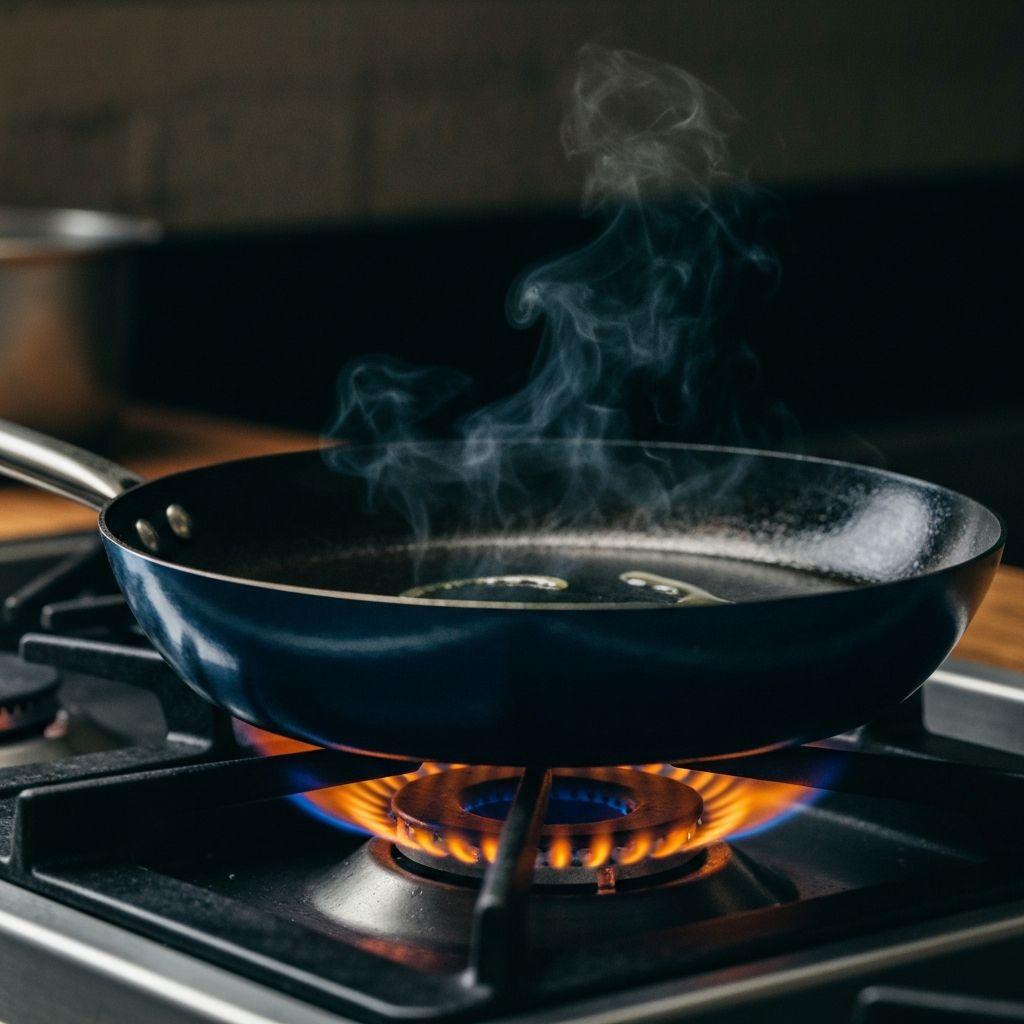
Heat Until Smoking
Place the pan over medium-high heat and allow the oil to smoke. You'll see the steel begin to shift from steel-grey toward a golden-brown tint. This is the polymerization process — the oil molecules are bonding to the metal surface permanently.
Wipe & Repeat
Remove from heat, wipe away any excess oil with a clean cloth, and repeat the process 2–3 more times. Each layer builds the patina. After 3 rounds, your pan is ready to cook on. The dark seasoning will deepen over months of use.
Ongoing Maintenance
After each cook, while the pan is still warm, wipe with a dry cloth or paper towel. For stubborn bits, use coarse salt as an abrasive with a small amount of oil. Never use soap on a well-seasoned pan — it strips the patina you've built.
Pro tip: If your carbon steel ever develops rust spots (from moisture), do not discard the pan. Scrub with steel wool to remove the rust, re-season from scratch, and the pan will be fully restored. Carbon steel cannot be permanently damaged by rust — it can always be brought back.
Chapter 02
Stainless Steel
Maintenance.
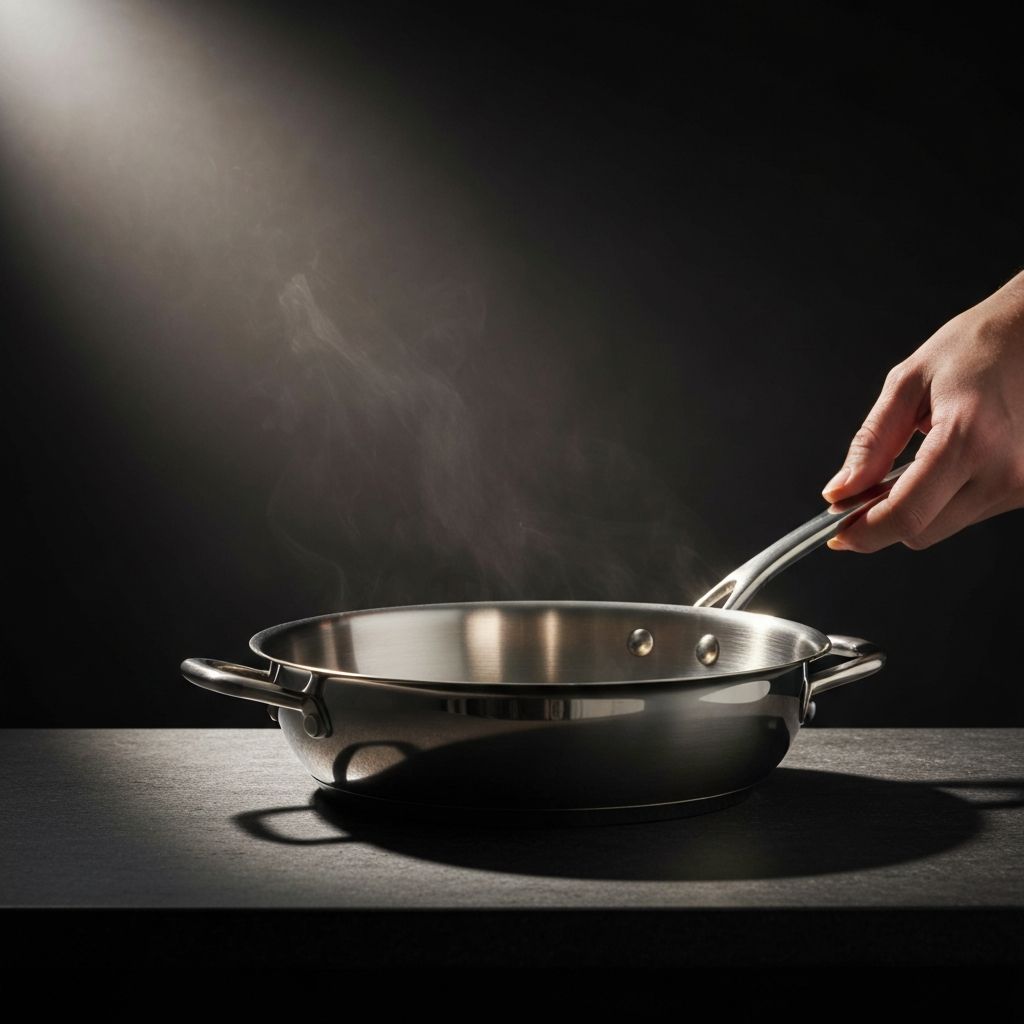
Stainless steel is the most forgiving material in the Made In lineup — it can go in the dishwasher, handle high heat, and be scoured aggressively. But knowing how to maintain it properly will keep it looking and performing like new for decades.
Removing Rainbow Heat Tints
The iridescent blue-yellow discoloration that appears after high-heat cooking is caused by a thin layer of oxidized chromium on the steel surface. It does not affect performance. To remove it, apply a small amount of Bar Keepers Friend with a damp cloth and rub in the direction of the grain. Rinse immediately. The pan will return to a mirror finish.
Removing Burnt-On Food
Fill the pan with enough water to cover the burnt area, bring to a boil, and use a wooden spoon to loosen the stuck bits. For stubborn residue, deglaze with white vinegar — the acidity cuts through carbonized food rapidly. Avoid metal scourers on polished surfaces; a non-scratch scrubbing pad works perfectly.
Preventing Food from Sticking
The most common cause of sticking on stainless is adding food to a cold or insufficiently preheated pan. Always preheat your stainless steel pan over medium heat until a drop of water dances and evaporates on contact (the Leidenfrost effect). Then add oil, then food. This technique eliminates the vast majority of sticking.
Chapter 03
Knife
Longevity.
Made In knives are forged from nitrogen-treated X50CrMoV15 steel in Thiers, France — a high-carbon alloy chosen for its ability to hold a razor edge through intensive use. That same carbon content means the blades require specific care to stay in peak condition.
Honing
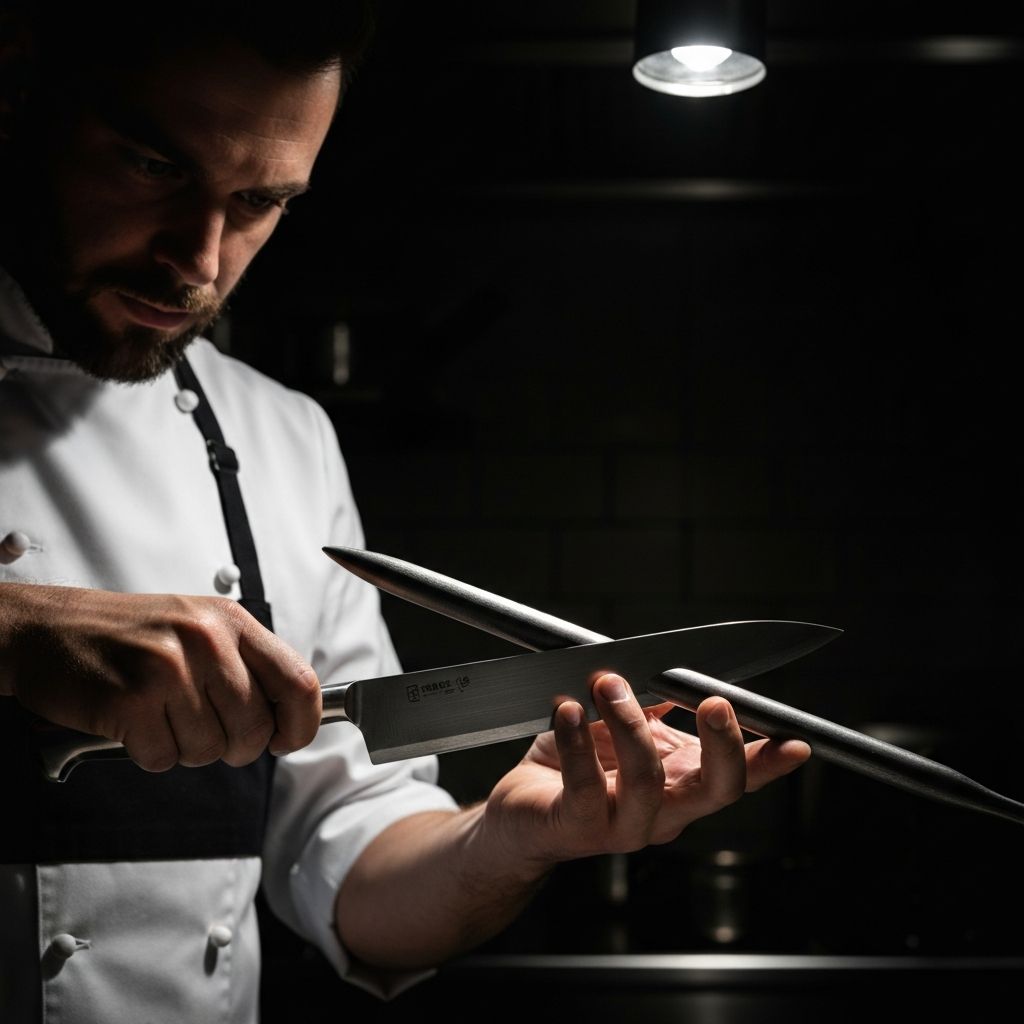
A honing rod does not remove metal — it realigns the microscopic edge that bends during cutting. Use a honing steel before every cooking session, 3–5 strokes per side at 15–20 degrees. This keeps the blade sharp between sharpenings.
Frequency: Before every use
Sharpening
Sharpening removes material to create a new edge. For Made In knives, use a whetstone (1000/3000 grit) or a professional sharpening service. Pull-through sharpeners damage high-carbon French steel by removing too much material inconsistently.
Frequency: 2–4 times per year
The Non-Negotiable Rules
Chapter 04
Which Pan
Should I Use?
Every material has a strength. The best-equipped kitchen uses all four — reaching for the right tool for the right task, rather than forcing one pan to do everything.
| Task | Stainless | Non-Stick | Carbon Steel | Copper |
|---|---|---|---|---|
| Searing Steak | Excellent | Poor | Excellent | Good |
| Scrambled Eggs | Difficult | Excellent | Excellent (seasoned) | Good |
| Precise Sauces | Good | Good | Good | Excellent |
| Deep Frying | Excellent | Poor | Good | Good |
| Oven Roasting | Excellent | Avoid above 500°F | Excellent | Excellent |
| Induction | Yes | Check model | Yes | No (unless lined) |
| Dishwasher Safe | Yes | Not recommended | Never | Never |
Ready to cook with the best?
Shop the full Made In Cookware lineup on Amazon.